Velunthariq
Where analysis usually starts

Leadership forums
Recurring leadership meetings often carry the heaviest decision load. By mapping which topics appear repeatedly, where discussions end without closure, and how actions are tracked, organisations can see whether the current format supports clear outcomes or simply circulates the same issues.
Project reviews
Cross functional project reviews bring together different expertise but also different incentives. Clarifying how evidence is presented, how risks are escalated, and how trade offs are recorded helps these sessions move from status reporting toward genuine joint decisions.

Operational huddles
Operational huddles and stand ups are usually brief yet frequent. Small adjustments to who speaks when, how blockers are raised, and which issues are moved to separate sessions can prevent these meetings from becoming crowded decision arenas by accident.
Hybrid sessions
Virtual meetings and hybrid sessions introduce extra complexity. Ensuring remote participants can contribute at key moments, and that decisions are summarised clearly on shared channels, keeps location from determining whose voice carries most weight.
Understanding group decision mechanics
Many teams assume that better decisions come from more data. Velunthariq starts from a different place, asking how the group handles tension, status, and uncertainty when the data is already on the table.
How teams apply insights from these decision patterns
-
Mapping influence patterns inside recurring meetings: Groups often follow the first confident voice, especially under time pressure. This topic examines anchoring, social proof, and deference to seniority, then links each pattern to concrete meeting behaviours such as who speaks first, how questions are framed, and when summaries are offered.
-
Making assumptions visible without slowing progress: Even experienced teams struggle to keep track of assumptions, caveats, and dependencies. This topic shows how simple visual aids and structured rounds of input can surface hidden concerns before they turn into later friction or rework, improving clarity without lengthening every discussion.
-
Aligning online collaboration with formal decisions: Digital tools promise transparency but often create parallel conversations and side channels. This topic reviews how chat threads, shared documents, and informal calls interact with formal meetings, and how to align them so decisions are recorded once, clearly, and in a place the whole group recognises.
-
Designing decision handovers that hold over time: After a decision, attention usually shifts to execution and tracking. This topic focuses on the handover moment, where ownership, metrics, and review points are defined. Clear handovers reduce later disputes about who agreed to what, and why a path was chosen over alternatives at the time.
Practical objectives for organisations
This section outlines how Velunthariq helps organisations examine the hidden mechanics of group decision dynamics. The objectives are practical. First, teams learn to recognise how social pressure, hierarchy, and unwritten rules shape who speaks, who stays silent, and which options receive attention. Second, groups map the decision paths they actually use, rather than the formal diagrams found in manuals. This gap often reveals where information stalls, where approvals pile up, and where responsibility is blurred. Third, leaders gain a shared language for describing trade offs, such as speed versus thoroughness, or harmony versus open disagreement. With that shared language, they can adjust meeting formats, prework, and follow ups in small steps instead of large restructures. Finally, organisations build internal capability to observe their own meetings, document recurring patterns, and refine practices over time without constant external involvement.
Distinctive elements of Velunthariq’s working style
Velunthariq works with real meeting artefacts such as agendas, minutes, and chat logs, rather than hypothetical case studies alone. The approach blends behavioral economics, organisational psychology, and facilitation practice to create methods that fit existing governance structures. Emphasis is placed on incremental adjustments that teams can test within current cycles, then refine using feedback from participants and observers.

Explore next steps
Discuss current meetings, recurring decisions, and where discussions tend to stall or rush.
Teams do not need a complete overhaul to improve group decision dynamics. Often, a
focused review of a few recurring meetings reveals enough patterns to guide meaningful
change. Velunthariq supports this by examining agendas, minutes, and recorded outcomes, then
suggesting modest adjustments that fit current structures and cultural norms.
Talk to us
Why focus on group decision dynamics
Examining how people actually behave in group settings helps organisations move from repeated debate toward decisions that hold under pressure and scrutiny.
Stronger shared ownership of key decisions
When group decision dynamics are examined directly, leaders gain a clearer view of who actually shapes outcomes in meetings. This reduces dependence on informal influencers and spreads responsibility across a broader group. Over time, decisions rely less on last minute persuasion and more on transparent criteria agreed in advance.
Clearer roles during complex group decisions
Reduced pressure on a single decision owner
More balanced contributions across functions
More predictable and efficient meeting time
By clarifying which topics require full group debate and which can be delegated, teams spend less time revisiting earlier choices. Meetings focus on issues that truly need cross functional input. As a result, timelines become more predictable, and project teams receive decisions that are easier to implement without reinterpretation.
Less repetition across recurring meetings
Faster closure on well scoped topics
Improved alignment before execution
From calendar management to decision design
Organisations often treat group decisions as a calendar problem. More meetings are
added, new templates are introduced, and yet outcomes still depend on who happens to be
in the room. Velunthariq approaches this differently. The starting point is to observe how
teams discuss options, handle disagreement, and close decisions under real constraints.
From those observations, recurring patterns emerge. For example, a group may
consistently delay difficult trade offs, or rush to agreement when senior leaders join
midway. Once patterns are visible, they can be addressed with small, concrete
adjustments. These might include changing the order of agenda items, introducing brief
silent review periods before votes, or defining which topics need full consensus and
which only require consultation. None of these steps rely on complex technology.
Instead, they respect existing structures while making them more transparent. Over time,
teams build internal habits that support better collective judgement, even as membership
and external conditions change.
Examples of how Velunthariq examines real group decisions

Decision pathway mapping workshop
This setting focuses on one recurring decision, tracing how information moves across functions before a conclusion is reached. Participants see where handoffs stall, where approvals cluster, and where informal influence overrides formal roles. The visual map becomes a neutral reference for future changes.

Leadership decision record review
Leaders review past agendas, minutes, and action logs to understand how decisions have
actually been made. The exercise highlights which topics consume time without closure,
which voices appear most in records, and where criteria for choices remain vague or
implicit.
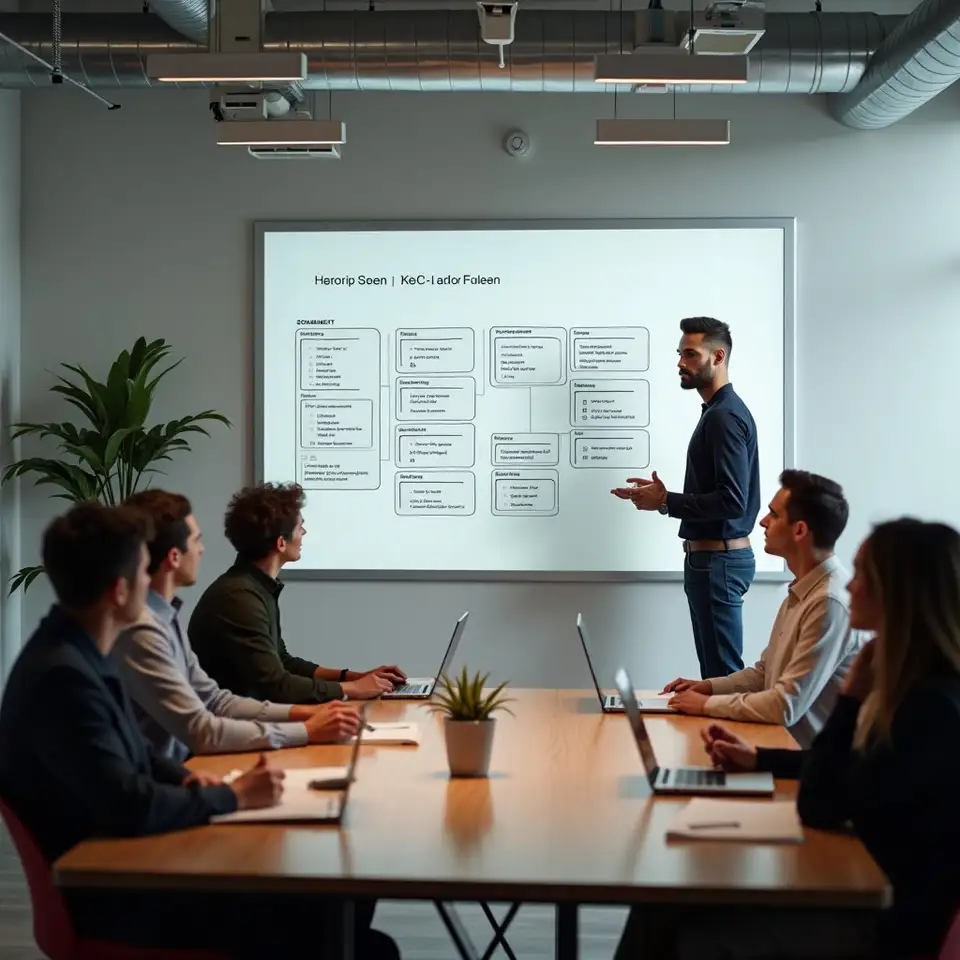
Testing new decision formats in hybrid teams
Teams experiment with simple adjustments to hybrid formats, such as silent review
periods, structured rounds of input, and clearer summaries of outcomes. These trials are
documented so successful practices can be repeated across other teams without adding
unnecessary complexity.